Alabama Coastal Birding Trail
Use the Gulf-side landscape as a starting point for exploring coastal habitats. Build in time for weather, tide, and the distance between stops.
View Audubon trail guide
Birding trails connect landscapes, parks, refuges, and small stops into an outing you can shape around your time and energy. Start with a region, then check current access information before you travel.
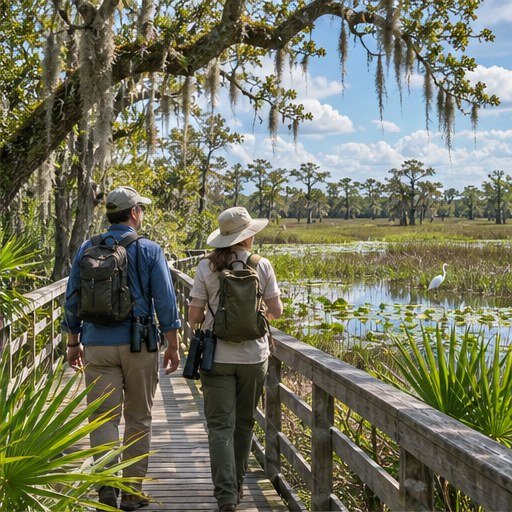
These examples point to established trail systems and birding regions. Use official land manager and trail sources for current hours, closures, and facilities.
Use the Gulf-side landscape as a starting point for exploring coastal habitats. Build in time for weather, tide, and the distance between stops.
View Audubon trail guideDelaware’s compact size and varied ecological regions make it a useful model for a multi-stop day. Choose a few stops rather than trying to cover everything.
View Audubon trail guideWashington’s different landscapes invite a longer itinerary. Pick a section that fits your trip and check seasonal road and site conditions.
View Audubon trail guideUrban edges, waterways, and natural areas can all be part of a birding day. Check the trail guide for named sites and plan around local transit or parking.
View Audubon trail guideFor a trip shaped by coastal communities and broad scenery, research connections between stops early. Local transport schedules can shape the whole day.
Read the Southeast Alaska guideAnchorage-area birding links city access with nearby coast and mountain settings. Look up current site access and trail conditions before setting out.
Read the Anchorage guideTrail systems can cover more ground than one outing allows. Select a short route with a clear turnaround point, and leave time for rest, snacks, and a second look.
Before you go, confirm parking, restroom availability, surface type, opening hours, and any seasonal restrictions with the place that manages the site.
Use the travel checklistBuild a route that leaves room for the unexpected.